

Foreigners Selling Property in Japan After Returning to Their Home Country: A Detailed Guide
ESTATE PLUS
Are Foreigners Free to Sell Property in Japan?
Yes, absolutely. Japanese law does not restrict foreigners' rights to own or transfer real estate, regardless of whether you're currently in Japan or have returned to your home country, and regardless of whether your visa is still valid or has expired. Ownership rights are protected through registration at the Legal Affairs Bureau (法務局 - Houmukyoku) and are not tied to residency status.
However, the real difficulty lies in the practical procedures: signing contracts, notarization, paying taxes, and making cross-border transfers all require either your physical presence or valid power of attorney. If you've already returned home, preparing things before leaving Japan will save you a great deal of time and money.
🔑 Key point to remember: Selling a house after returning to your home country is entirely feasible, but you'll need a representative (代理人) in Japan with valid power of attorney. Setting up the power of attorney before leaving Japan is far simpler than doing it from Vietnam through the embassy. |
Step 1: Preparing Before You Return Home
This is the most important stage. The more thoroughly you prepare before leaving Japan, the less likely you'll need to fly back or deal with complicated procedures through the embassy.
1.1. Set up a notarized power of attorney (委任状)
This is the most important document, allowing your representative in Japan to sign contracts and carry out all procedures on your behalf. The power of attorney must be notarized (公証役場) in Japan, or at a Japanese embassy or consulate in your home country.
It's best to do this before leaving Japan, since the process is much faster in Japan (1~2 days) compared to going through the embassy (1~3 weeks, sometimes requiring certified translation).
1.2. Gather all property documents
Collect all original documents: the certificate of ownership (登記済権利証 or 登記識別情報), the original purchase contract, property records, and floor plans. These documents are difficult or impossible to recover if lost.
1.3. Open or maintain a Japanese bank account
The sale proceeds will first be transferred into a Japanese account before being sent abroad. Accounts at major banks such as MUFG or SMBC are easier to receive funds into. Confirm with your bank about the procedure and fees for transferring money overseas before you leave.
1.4. Choose a real estate brokerage (不動産会社)
Contact a brokerage while you're still in Japan so you can meet in person, review the contract, and confirm details. Prioritize a firm with experience selling property on behalf of non-resident owners (非居住者).
💡 Important tip: If you haven't decided on a sale price yet, request a valuation (査定) from a brokerage. This service is completely free and gives you a realistic basis for setting your listing price. |
Step 2: Required Documents
Below is a list of documents typically required for a property sale transaction in Japan.
Document | Japanese Term | Notes |
Certificate of Ownership | 登記済権利証 / 登記識別情報 | Mandatory. If lost, an expensive replacement procedure is required at the Legal Affairs Bureau |
Passport (original or copy) | パスポート | Confirms the owner's identity |
Notarized Power of Attorney | 委任状(公証済) | Required if selling through a representative. Must be notarized in Japan or at a Japanese embassy |
Original Purchase Contract | 売買契約書(購入時) | Needed to calculate capital gains tax. If lost, bank statements may be used instead |
Property Documents | 確認済証・確認申請書・間取り図・建物図面 | Helps the listing sell more effectively. Brokerages usually keep copies on file |
Bank Account Information | 振込先口座情報 | The account in Japan that will receive the sale proceeds. Needed before the handover date |
⚠️ If you've already returned home without power of attorney: You can set one up at the Japanese Embassy in Hanoi or Ho Chi Minh City, after which it will need consular legalization (アポスティーユ) and a certified Japanese translation. This process takes 3-6 weeks and costs around 300,000-500,000 VND. It's much better to handle this before leaving Japan. |
Step 3: Taxes & Finances
This is the part many people overlook and are caught off guard by. In Japan, capital gains tax on real estate sales (譲渡所得税) can take a significant cut if the property has appreciated, and special rules apply differently to non-residents (非居住者).
Tax Type | Rate | Applicable Conditions |
Short-term capital gains tax (短期譲渡所得税) | 39.63% | Owned for less than 5 years as of January 1 of the sale year |
Long-term capital gains tax (長期譲渡所得税) | 20.315% | Owned for 5 years or more |
Withholding tax at source (源泉徴収) | 10.21% | Mandatory for non-residents. The buyer withholds this amount before payment |
Brokerage fee (仲介手数料) | Up to 3% + 60,000 yen | Paid to the brokerage firm (both seller and buyer pay this) |
3.1. The 10.21% withholding tax — a special point for foreigners
If you are a non-resident of Japan (非居住者), the buyer is legally obligated to withhold 10.21% of the sale price and remit it to the Japanese tax office on your behalf. This is not the final tax amount, only a provisional payment. You must still file a tax return (確定申告) in February~March of the following year to settle the final amount and claim a refund if you overpaid.
3.2. An important exception: exemption from the 10.21% withholding
If the sale price is under 100 million yen and the buyer will use the property as their actual residence (not as an investment), the 10.21% withholding may be exempted. Confirm this clearly with your brokerage, as it directly affects the cash flow you'll receive.
3.3. The 30-million-yen tax exemption for a primary residence
If you lived in and used the property as your primary residence (居住用財産), you may qualify for a special deduction of 30 million yen (3,000万円特別控除) against your taxable capital gain. Conditions: you must file within 3 years of moving out and report accurately. Many people miss out on this very significant benefit simply because they aren't aware of it.
✅ Tax recommendation: Hire a tax accountant (税理士) experienced with real estate transactions involving non-residents. The cost is around 100,000~300,000 yen, but it can help you save millions of yen through tax optimization and avoid costly filing mistakes. |
Step 4: Selling Remotely
Once you have valid power of attorney and complete documentation, most of the process can be handled remotely via email, Zalo/LINE, electronic signatures, or postal mail.
1. Sign the brokerage agreement remotely: The brokerage agreement (媒介契約) can be signed via email, with the original sent by EMS/DHL. It's best to choose an exclusive agreement (専任媒介, working with a single firm) rather than a non-exclusive one (一般媒介, multiple firms selling simultaneously), so the firm has a stronger incentive to sell actively.
2. Track progress via email/LINE: Real estate firms in Japan are accustomed to providing periodic reports (業務報告) to absent owners. Request a written report every 2 weeks, including the number of viewings, feedback received, and any suggested price adjustments.
3. Sign the sale contract (売買契約): This is the most critical step, typically requiring a signature and personal seal (印鑑) in person. If you have a valid representative, they can sign on your behalf. Otherwise, you'll need to send documents via international mail with signature verification at the embassy. Some brokerages offer electronic signing, but this isn't yet widely available in Japan.
4. Handover and payment (引き渡し・決済): Your representative carries out the key handover and receives the funds into your Japanese bank account. You then arrange to transfer the money to Vietnam through your bank, using the sale contract as supporting documentation.
5. Tax filing and refund (確定申告): Even after returning home, you must still file a tax return in Japan in February~March of the following year. You can have a 税理士 file on your behalf. If the 10.21% withholding exceeds the actual tax owed, you'll receive a refund into your Japanese account — remember to keep that account active until then.
Step 5: Transferring Money Back Home
Once the funds are in your Japanese account, you have several options for transferring them to Vietnam. Each option has different trade-offs in terms of exchange rate, fees, and processing time.
Method | Estimated Fee | Time | Best For |
SWIFT wire transfer via a Japanese bank | 2,500~5,000 yen/transfer + exchange rate margin | 2-5 business days | Large amounts |
Wise / Revolut | 0.4~1% of total amount | 1-2 days | Saving on fees |
Western Union / MoneyGram | Higher fees | Fast | Not recommended for large amounts |
📋 Documentation needed for large transfers: For amounts of several tens of millions of yen or more, Japanese banks will require documentation proving the source of funds: the sale contract, tax receipts, and sometimes confirmation from the tax office. Preparing this documentation in advance will help you avoid having funds held or your account frozen. The receiving bank in Vietnam may also ask about the source of the incoming foreign currency. |
Practical Summary: Complete Checklist for Sellers Returning Home
✅ Before leaving Japan
☐ Set up a notarized power of attorney for your representative in Japan
☐ Gather all property documents into one envelope
☐ Request a valuation from a real estate brokerage
☐ Keep your Japanese bank account active (don't close it right away when you leave)
☐ Ask your bank about the overseas transfer procedure and fees
☐ Consult a 税理士 about the specific tax obligations for your situation
✅ During the sale process (from Vietnam)
☐ Maintain regular communication with the brokerage via email/LINE
☐ Request a written progress report every 2 weeks
☐ Monitor the market to consider timely price adjustments
☐ Have documentation ready to send promptly when signatures are requested
✅ After the sale is complete
☐ Have a 税理士 file your tax return (確定申告) in February-March of the following year
☐ Track any tax refund (if applicable) to your Japanese account
☐ Prepare documentation on the source of funds for the transfer to Vietnam
☐ Keep all transaction records for at least 7 years (a Japanese legal requirement)
Conclusion: Selling Remotely Is Difficult, But Entirely Feasible
Selling a house in Japan after returning home is not simple, but thousands of foreigners do it successfully every year. The key lies in preparation: a notarized power of attorney, complete property documents, a reputable brokerage, and a knowledgeable 税理士 are all essential.
If you're preparing to return home, set aside at least 1~2 months at the end of your time in Japan to handle all the legal paperwork. That time will help you avoid many costly headaches later on, including having to fly back to Japan just to sign a single document.
The average time to sell a property in Japan's current market is 3~6 months for condos in major cities and 6~12 months for detached houses in suburban areas. Prepare yourself mentally to wait, and avoid dropping the price too quickly during the first month of listing.
👉 If you're preparing to return home and need to sell your property in Japan, contact ESTATE PLUS now to get support preparing your power of attorney and documentation, and to be connected with brokers and tax accountants experienced in non-resident transactions — helping your remote sale go as smoothly and safely as possible.
This article is for informational purposes only. Japanese tax laws and real estate regulations are subject to change. Please consult a legal and tax professional before proceeding with any transaction.
Related Posts
View all in this category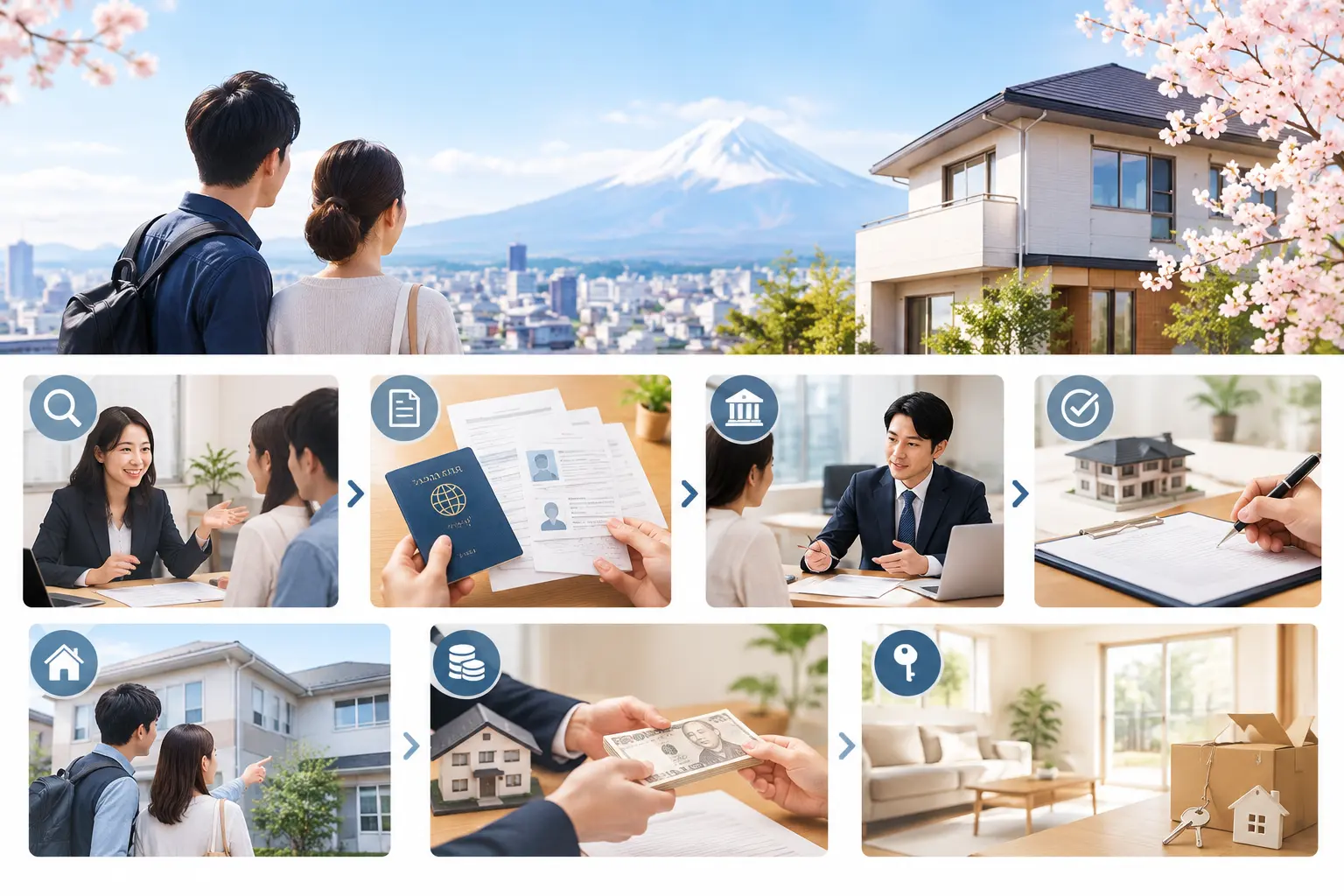
Step-by-Step Guide to Buying a House in Japan for Foreign Residents
Are you living and working in Japan, dreaming of owning your own home? The process of buying propert...
Cost of Buying a House in Japan: Besides rent, what other expenses do you need to prepare?
Buying a house in Japan, in addition to the rent, you need to prepare an additional 6-10% of the hou...
CONDO OR DETACHED HOUSE? A Detailed Comparison Before Buying Property in Japan
Which is right for you - a CONDO or a HOUSE? Compare management costs, appreciation potential, and p...