
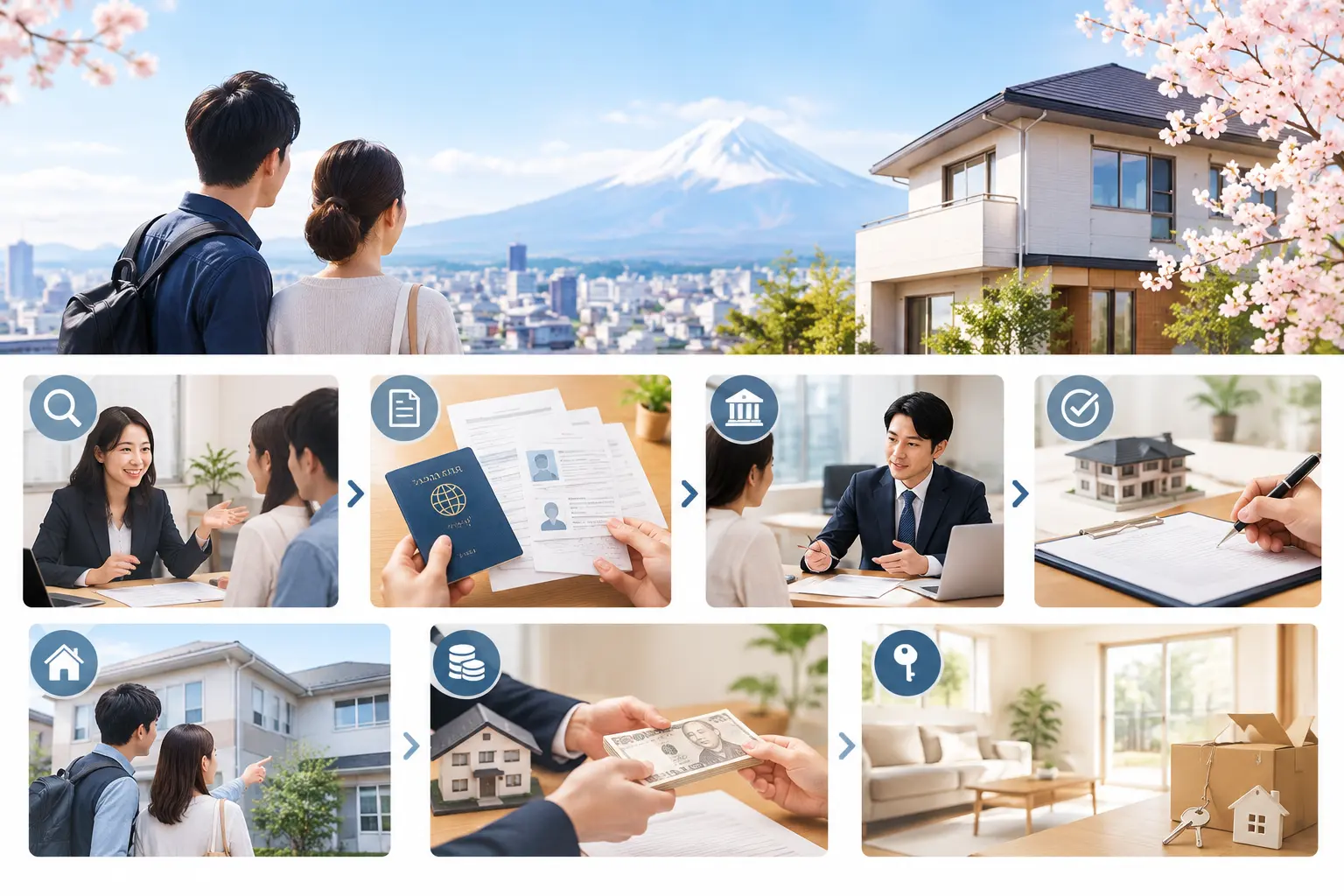
Step-by-Step Guide to Buying a House in Japan for Foreign Residents
Are you living and working in Japan, dreaming of owning your own home? The process of buying property in an unfamiliar country, with language barriers and a different legal system, can leave many Vietnamese feeling confused about where to start. This article will walk you through the complete steps to buying a house in Japan from A to Z, from loan pre-screening to receiving the keys, so you can move forward confidently on your journey to settling down in this country.
Why Is It Important to Understand the Home-Buying Process in Japan?
For foreigners — especially Vietnamese residing in Japan on work visas, engineer visas, or as international students — buying a house isn't as simple as purchasing an ordinary product. It involves banks, legal contracts, and a range of documents that need to be carefully prepared.
Understanding the process will help you:
Proactively prepare the necessary documents and save time
Correctly understand your rights and obligations when signing the contract
Avoid unnecessary financial risks
Below are the 6 basic steps in the home-buying process in Japan that you need to know.
Step 1: Jizenshinsa (事前審査) – Pre-Screening Assessment
This is the first and most important step in buying a house in Japan, as it helps determine your borrowing capacity before you start house hunting.
The Real Estate Agent Discusses Your Needs
The supporting real estate agency will speak with you directly to understand:
Your desired living area
Type of property (new house, used house, apartment, or whole house)
Your expected budget
Collecting Documents for Bank Assessment
Once your needs are understood, the agency will guide you in gathering the necessary documents to submit to the bank. The bank will use these documents to:
Determine the maximum loan amount you may be approved for
Provide an estimated interest rate
The result of this pre-screening assessment serves as the basis for determining your realistic budget when searching for a home.
Step 2: Finding and Deciding on a House
Once you know your financial capacity, you can move on to the next important step: house hunting.
Searching for a Home That Matches Your Preferences
Based on the criteria discussed in Step 1 (area, property type, budget), the agency will introduce properties that best match your needs.
Viewing the Property in Person
You should visit the property in person to evaluate:
The actual condition of the house
The surrounding environment, transportation, and amenities
Direction, natural light, and noise levels
Deciding on Your Preferred Property
After careful consideration, you finalize your choice and move on to the contract-signing stage.
Step 3: Signing the Sales Contract (売買契約)
This step carries significant legal weight, so it's essential to fully understand every clause before signing.
Drafting and Explaining the Contract
The real estate agency and the seller will jointly draft the sales contract
The contract's contents will be explained in detail to the buyer
The buyer must thoroughly understand every term before proceeding to sign
Affixing the Contract Stamp and Paying the Deposit
Once you agree to the contract terms, the following steps take place:
Affixing the revenue stamp (印紙) as required by law
Paying a deposit, typically around 10% of the property's value
The deposit amount is often negotiable, with a common amount being around 1 million yen (100 man yen).
Step 4: Honshinsa (本審査) – Final Loan Assessment
After signing the contract, the bank will require you to submit all necessary documents for the final loan assessment.
Unlike Jizenshinsa (which is only a preliminary reference assessment), Honshinsa is the final assessment stage that determines whether the bank will officially approve your loan.
Step 5: Final Property Inspection Before Handover
This step typically applies to new properties (which were already inspected during the initial viewing stage).
Before the official handover, three parties will jointly conduct a final inspection of the property:
The buyer
The seller
The intermediary real estate agency
The purpose of this step is to ensure the property matches exactly what was agreed upon in the contract, with no damage or discrepancies before finalizing the transaction.
Step 6: Final Settlement and Handover
This is the final step, marking the completion of the entire home-buying process in Japan.
The tasks involved in this step include:
The bank transfers the loan amount to the buyer
The buyer pays related fees (brokerage fees, notarization fees, registration tax, etc.)
Receiving the house keys, officially becoming the property owner
After this step, your home-buying process in Japan is complete.
Summary
The home-buying process in Japan consists of 6 main steps: Pre-screening assessment (Jizenshinsa) → Finding and deciding on a house → Signing the sales contract → Final loan assessment (Honshinsa) → Final inspection before handover → Settlement and key handover.
Understanding each step will help Vietnamese people in Japan — whether working visa holders or long-term foreign residents — be more proactive in preparing documents and finances, and make sound decisions when buying a home.
If you're looking to buy a house in Japan and need support, please contact a trusted real estate agency for advice tailored to your specific situation.
Related Posts
View all in this category
Cost of Buying a House in Japan: Besides rent, what other expenses do you need to prepare?
Buying a house in Japan, in addition to the rent, you need to prepare an additional 6-10% of the hou...
CONDO OR DETACHED HOUSE? A Detailed Comparison Before Buying Property in Japan
Which is right for you - a CONDO or a HOUSE? Compare management costs, appreciation potential, and p...

Tokyo, Osaka, Nagoya, Fukuoka Housing Prices in 2026: How Much Longer Will They Keep Rising?
Updated 2026 property prices in Japan's four major cities: Tokyo, Osaka, Nagoya, and Fukuoka. An ana...