
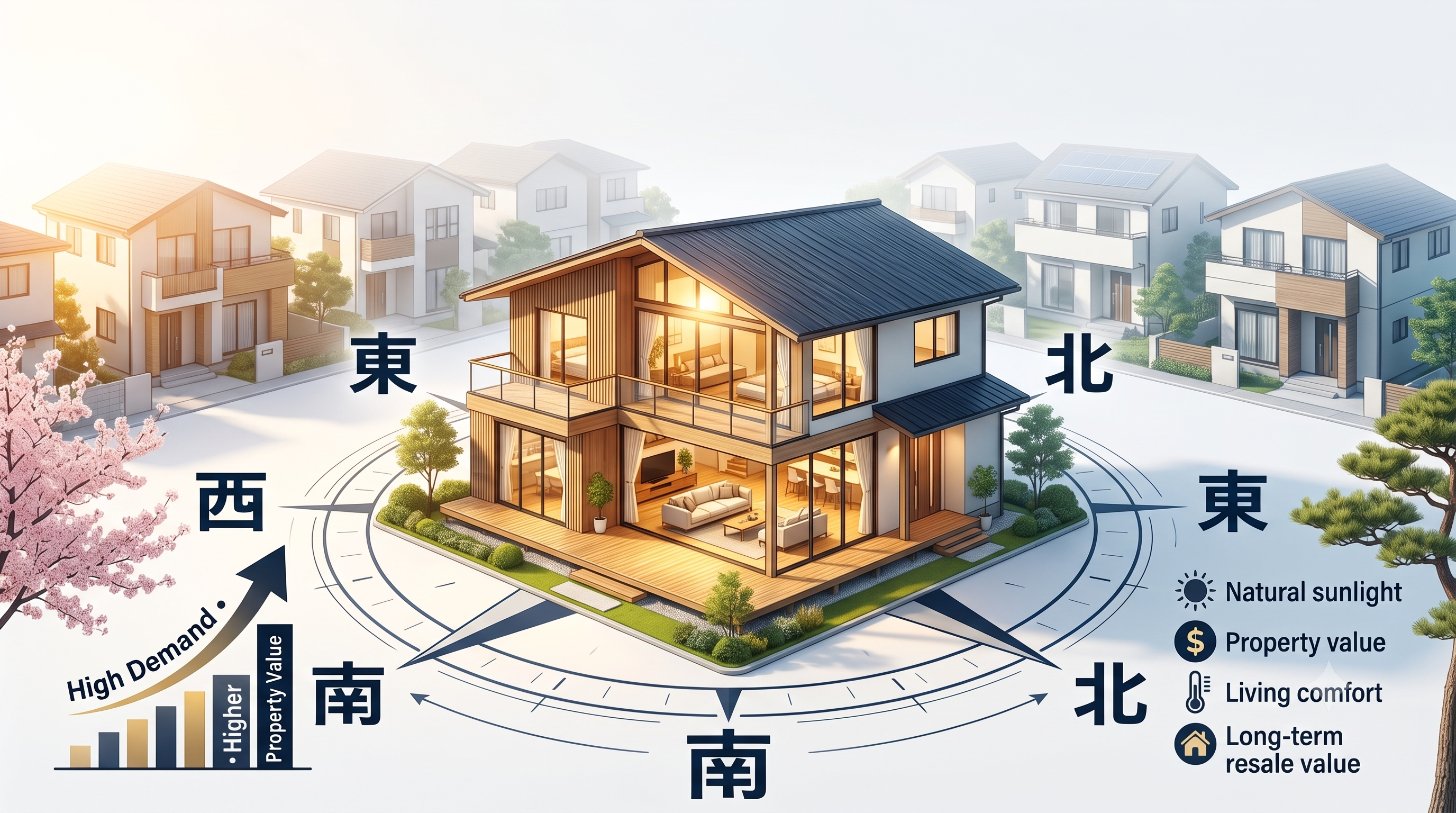
Which Direction Is Best for a House in Japan? Why South-Facing Properties Are Always the Most Expensive
Which Direction Is Best for a House in Japan? Why South-Facing Properties Are Always the Most Expensive
A comprehensive analysis of house orientation by Japanese standards — from natural light and real-world value to practical advice for buyers.
Rank | Direction | Rating | Price Level |
#1 | 南 South | BEST | Highest |
#2 | 東 East | VERY GOOD | High |
#3 | 西 West | FAIRLY GOOD | Average |
#4 | 北 North | LESS PREFERRED | Lowest |
1. How Much Do the Japanese Value House Orientation?
In Japan, a property's orientation (向き - muki) is one of the top criteria when buying real estate, and is even clearly listed on property information sheets (物件概要 - bukken gaiyo) right below the floor area and sale price. It's no coincidence that south-facing homes are consistently listed at 5~15% higher prices than otherwise identical properties facing a different direction.
The reason isn't feng shui or superstition, but rather climate realities and the distinctive way Japanese homes are built, where natural sunlight is treated as a valuable resource for both health and electricity bills.
☀️ The basic reason: Japan is located in the Northern Hemisphere, so the sun moves toward the south throughout the day. A home facing south will receive the most direct sunlight — this is the foundation of the entire preference hierarchy for house orientation. |
2. Why Are South-Facing Homes Always the Most Expensive?
The answer lies in 4 specific benefits that south-facing orientation provides, which the Japanese quantify very clearly:
2.1. Natural light throughout the day
The living room and main living space (リビング) are typically placed on the south side to capture sunlight from morning to evening. Children doing homework, adults reading, the whole family having breakfast — all bathed in abundant natural light without needing to turn on the lights. This is a genuine practical benefit, not just a subjective preference.
2.2. Warmer winters, lower heating costs
Japan's winters are long, especially in Tokyo, Osaka, Nagoya, and the northern regions. South-facing sunlight entering through large sliding glass doors (掃き出し窓) naturally raises room temperature by 2~4°C — a figure that may seem small but adds up to significant savings on annual electricity bills.
2.3. Laundry drying — a daily necessity for Japanese households
The culture of outdoor laundry drying (外干し) remains very common in Japan. A south-facing balcony means laundry dries faster and with less musty odor — something many Japanese households consider a must-have condition when choosing a home.
2.4. Higher resale value
Because the market broadly agrees that south is the best orientation, south-facing homes retain their value better when resold. This is a real financial advantage, especially if you plan to live there for 5~10 years before selling.
📊 Actual price difference: According to surveys of major Japanese real estate platforms (SUUMO, AtHome), south-facing condos in Tokyo and Osaka are typically priced 8%~18% higher than north-facing units on the same floor with the same floor area, depending on the area. |
3. Detailed Comparison Table: South - East - West - North
Direction | Sunlight | Winter Temp. | Laundry Drying | Relative Price |
South (南向き) | All day | Warmest | Best | Highest |
East (東向き) | Morning | Fairly warm | Good | High |
West (西向き) | Afternoon | Average | Fair | Average |
North (北向き) | Almost none | Coldest | Poor | Lowest |
4. East-Facing: The 2nd Most Popular Choice
Many young families prefer east-facing homes because morning sunlight is generally gentler than afternoon sun, which fits well with an early-morning work schedule. An east-facing bedroom makes waking up feel more natural and pleasant.
5. West-Facing: Watch Out for Afternoon Sun
West-facing homes receive afternoon sunlight, which tends to be hotter and harsher than morning sun from the east or all-day sun from the south. In summer, west-facing rooms can get very hot between 2pm and 6pm and require good blackout curtains or near-constant air conditioning. This is why west-facing homes are less preferred than east-facing ones, even though both receive sunlight for only part of the day.
6. Should You Buy a North-Facing Home to Save Money?
This is the most practical question of all, and the answer is: it depends on your circumstances. A north-facing home isn't a bad choice for everyone, but you need to clearly understand the trade-offs involved.
✅ PROS OF NORTH-FACING | ⚠️ CONS OF NORTH-FACING |
• 8~18% lower purchase price • No direct sun, cooler in summer • Even, diffused light with less glare • Lower summer air-conditioning bills | • Dark; lights needed during the day • Colder and more humid in winter • Laundry takes longer to dry, prone to musty odors • Higher risk of mold • Lower resale value |
6.1. When is north-facing a reasonable choice?
North-facing may suit you if you:
• Work from home and need even, consistent lighting (photography, design, programming)
• Are frequently away from home during the day
• Prioritize summer coolness over winter warmth
• Live in a warmer climate region (Osaka, Fukuoka, Okinawa)
• Have a tight budget and want to own a home sooner
6.2. North-facing may not suit you if you:
• Have young children or elderly family members who need warm sunlight
• Live in a cold region such as Sapporo, Sendai, or Tokyo in winter
• Regularly dry laundry on a balcony
• Have mold allergies or respiratory issues
• Plan to resell within 5~7 years
7. A Practical Calculation: Savings or Extra Costs?
Suppose a 60m² condo in Tokyo costs 50 million yen facing south, versus 43 million yen facing north (a 7-million-yen savings at purchase).
However, you may spend an extra 30,000~60,000 yen per year on heating and lighting, plus the cost of dehumidifiers and moisture control. Over 20 years, this operating cost difference could add up to 1~1.2 million yen — still notably better value than choosing south if you don't plan to resell.
8. Checklist for Viewing Homes in Japan by Orientation
Beyond the property's main orientation, several other practical factors affect the actual quality of light you'll receive:
• View the property at midday: this is when the light difference between orientations is most apparent.
• Check the building across the street: a south-facing home blocked by a tall building can be worse than an unobstructed east-facing one.
• Check the floor level: a low floor (低層階), even if south-facing, can still be darker than a higher north-facing floor in a dense neighborhood.
• Ask about the surrounding zoning (用途地域): a pure residential zone (第一種低層住居専用地域) guarantees no tall buildings will be built nearby in the future.
• Check actual humidity levels: inspect wall corners and ceilings for signs of mold, especially for north-facing units.
• Check the balcony's position: a south-facing balcony that's too narrow or has a large overhang can also significantly reduce the light entering the home.
Conclusion: Which Direction Should You Choose?
If your budget allows: south-facing is always the safest choice — good for quality of life, easy to resell, and rated highest by the Japanese market. Southeast-facing is the ideal sweet spot if you want a balance between morning and midday sun.
If your budget is limited: north-facing is a reasonable choice if you clearly understand its limitations and compensate with the right equipment (dehumidifiers, a good heating system, insulated curtains). Saving 7~10% on the purchase price is a real financial advantage, especially for young, first-time buyers.
💡 Most important takeaway: The building across the street, the floor level, and the surrounding building density can sometimes affect the actual light you receive even more than the orientation itself. Always view a property during the daytime before deciding. |
👉 If you're viewing properties and aren't sure which orientation to prioritize based on your budget and lifestyle needs, contact ESTATE PLUS to have our consulting team assess each property realistically — not just based on the orientation listed on paper, but also the floor level, the building across the street, and the surrounding zoning.
This article is for informational purposes only. Actual real estate prices may vary by area and market timing.
Related Posts
View all in this category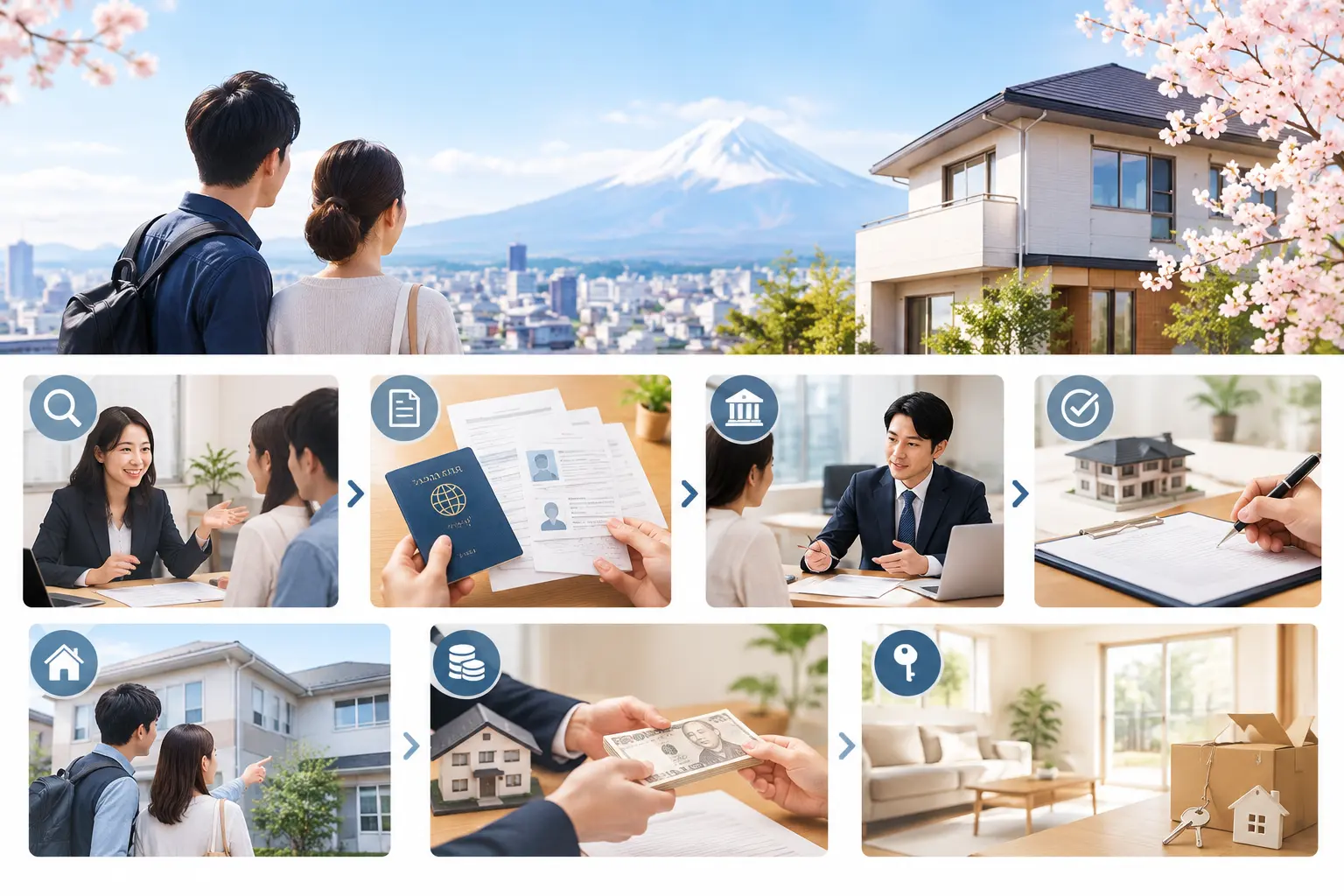
Step-by-Step Guide to Buying a House in Japan for Foreign Residents
Are you living and working in Japan, dreaming of owning your own home? The process of buying propert...
Cost of Buying a House in Japan: Besides rent, what other expenses do you need to prepare?
Buying a house in Japan, in addition to the rent, you need to prepare an additional 6-10% of the hou...
CONDO OR DETACHED HOUSE? A Detailed Comparison Before Buying Property in Japan
Which is right for you - a CONDO or a HOUSE? Compare management costs, appreciation potential, and p...